It ain’t easy being green *UPDATED*

For many years, the bête noire of Marin County driving was the jam, both North and South, in the 101 corridor at San Rafael.  If you headed south in the morning, that bottleneck could back you up for miles, almost up to Novato.  And if you headed north in the afternoon, it was even worse, since it caused endless traffic bottlenecks from both the south and the east.  Stop and go was the name of the game, with an 11 minute ride being stretched out to as much as 40 minutes.

You’ll notice that the preceding paragraph is in the past tense.  That’s because, after years of work done only in fits and starts, CalTrans finally completed a freeway expansion, adding one lane to each side of the freeway at San Rafael.  The difference is magical.  Traffic jams are a thing of the past.  One just zips through.

To my way of thinking, this simple freeway expansion was just about the greenest thing anyone could have done.  As we know instinctively, and as studies show, traffic jams dramatically increase fuel consumption.  Do away with those jams and, voila, better consumption and less pollution.

I was thinking about these hidden costs of driving and fuel consumption when I read the article detailing a study by 2 UC Davis scientists showing that, depending on the nature of your local public transportation, squeezing onto a municipal rail car (and in San Francisco, that means lice and groping, among other things), may not be the green thing to do.

All of which leads one to the possible (and, admittedly paranoid) conclusion that the greenies are hiding the easy fixes (better roads, more private cars), because they want to drive people out of cars altogether.  This isn’t just about stopping pollution, it’s about recreating their utopian vision of a pre-industrial paradise.

And it is true that, if you lived like this:
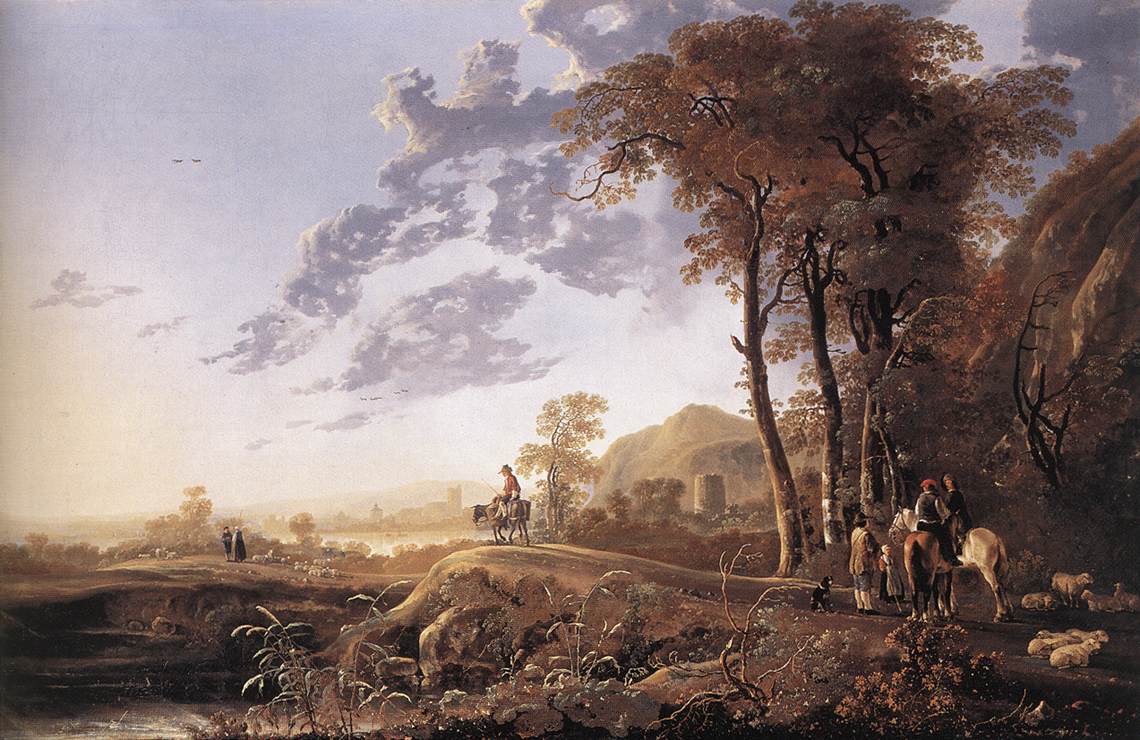
Aelbert Cuyp, Evening Landscape

Aelbert Cuyp, Evening Landscape

or this

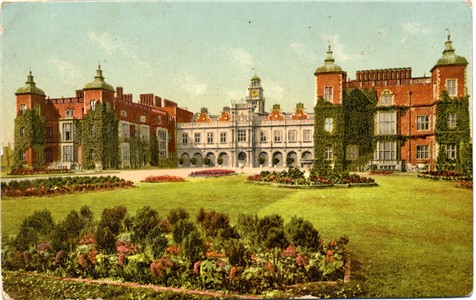
Hatfield House

Hatfield House

the pre-industrial age it was a paradise.

The problem for the utopian greenies is that, in a populated, pre-suburban world, so many people lived like this:
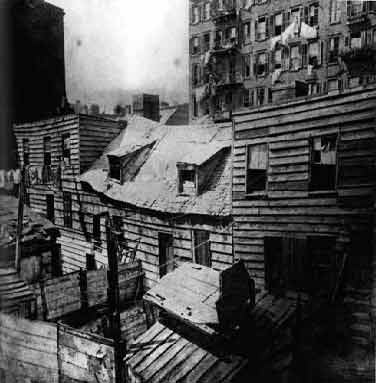
Jacob Riis photo -- New York tenements

Jacob Riis photo -- New York tenements

It was fossil fuel that enabled people to get out of urban hellholes and to have ready access to food and medicine.  Only the ill-informed think a world without cars is a better place.  What is in fact a better place is a world with good roads and energy efficient vehicles.

UPDATE:  And with perfect timing, in the same news cycle, I read about a greenie planning an entirely new subdivision that is hostile to cars.  In my day, we called that the inner city, and people wanted, really wanted quite badly, to leave it.

Related posts:

  1. I wonder how many homeowners are going to stay Green *UPDATED*
  2. Man or boy toy? *UPDATED*
  3. Famous black socialists *UPDATED*
Email This Post To A Friend Email This Post To A Friend

10 Responses to “It ain’t easy being green *UPDATED*”

  1. on 08 Jun 2009 at 9:35 am Charles

    Very good thoughts!

    I have always wondered about the “greeness” of making everyone take public transportation. Without cars, those who work odd hours (maintence people, food-service people, etc.) are either using public transportation that is polluting more to transport just a couple of people at 3:00 am, or more likely, they (and they usually are the working poor) are out of luck as local transit authorities don’t want to provide full service at odd hours.

    Another thing that is ironic is that here in the New York area the local TV news often shows NYC Mayor Mike Bloomberg taking public transit. What they don’t show is that he is driven, by car, to the subway so that he can be in the photo op of riding the subway.

  2. on 08 Jun 2009 at 3:01 pm David Foster

    Re the linked study…

    1)Passenger rail can be very energy-efficient IF the trains are full. But if you’re hauling around heavy passenger coaches 1/4 full (and our passenger cars are heavier than those of many other countries, due to federal safety standards), then not so much. And schedule convenience implies that load factors won’t always be high.

    2)People who criticize American passenger rail inferiority rarely mention our very extensive and efficient *freight* rail system. And to the extent that pax rail uses existing freight infrastructure, there’s a danger of creating congestion and driving shippers away from rail and back to truck…thereby *reducing* overall energy efficiency.

  3. on 08 Jun 2009 at 3:19 pm BrianE

    An internationally renowned energy expert has written a book essential for every American–a galvanizing account of how the rising price and diminishing availability of oil are going to radically change our lives. Why Your World Is About to Get a Whole Lot Smaller is a powerful and provocative book that explores what the new global economy will look like and what it will mean for all of us.

    In a compelling and accessible style, Jeff Rubin reveals that despite the recent recessionary dip, oil prices will skyrocket again once the economy recovers. The fact is, worldwide oil reserves are disappearing for good. Consequently, the amount of food and other goods we get from abroad will be curtailed; long-distance driving will become a luxury and international travel rare. Globalization as we know it will reverse. The near future will be a time that, in its physical limits, may resemble the distant past.

    But Why Your World Is About to Get a Whole Lot Smaller is a hopeful work about how we can benefit–personally, politically, and economically–from this new reality. American industries such as steel and agriculture, for instance, will be revitalized. As well, Rubin prescribes priorities for President Obama and other leaders, from imposing carbon tariffs that will increase competition and productivity, to investing in mass transit instead of car-clogged highways, to forging “green” alliances between labor and management that will be good for both business and the air we breathe.

    Most passionately, Rubin recommends ways every citizen can secure this better life for himself, actions that will end our enslavement to chain-store taste and strengthen our communities and timeless human values. – Amazon review

    Haven’t read it, only saw the end of an interview with the author. In his vision, energy prices will force re-urbanization, reclaiming suburban and rural land for other uses.

    Pretty dreary thought.

  4. on 08 Jun 2009 at 3:26 pm Charles Martel

    Here in Marin County we stupidly passed a tax to fund a Toonerville Trolley that runs 70 miles from a backwater town up in the next county to the ferry terminal here that connects to San Francisco.

    The number of residents in both counties, including people who live 40 or 50 hard and winding two-lane miles from the stations, is about 700,000. The vast majority of them do not have travel or commuter patterns that coincide with the rail line’s planned stops. There’s nowhere near the density needed to make this more than a toy for yuppies who think it’s so cool to take little Cody and Brandon on the cute non-polluting (diesel) train up to Healdsburg for a gourmet pizza every six weeks or so.

    The train’s proponents promise that even if it doesn’t solve our traffic problems at least it’s green, and even if it’s not all that green it’s the thought that counts, and even if that thought turns out to be a white elephant, it has some really evolved, well-meaning people behind it.

    I would have been happy to vote for enough money to a.) buy model railroad kits for all the greenie railaholics out there and b.) acquire a stretch of empty land where they could endlessly run a train back and forth between two Potemkin villages without bothering the rest of us.

  5. on 08 Jun 2009 at 5:02 pm BrianE

    Our very rural community (population 18,000 or so in a county of 60,000) began offering bus service in 1995 using a state grant. Two years later, the wise Latina voters passed a hike in our sales tax to fund the transit authority.
    The buses run approx. 70,000 miles a month, transporting approx. 10,000 riders. (I’m extapolating figures from their website).
    At the time I suggested we give each person that wanted to use the system a pager, send a car and transport them where they wanted to go. I never ran any numbers, but suspect it would have been cheaper, and faster for the riders.
    There are a couple of routes that have good ridership– ones that run to a couple of processing plants and to the college.
    For the most part, the buses dutifully run from stop to stop with the occasional passenger.

  6. on 08 Jun 2009 at 6:51 pm David Foster

    Only vaguely on-topic, but I like this 1902 view on the social effects of the trolley.

  7. on 08 Jun 2009 at 7:43 pm Earl

    I grew up in Ukiah in the ’50s, and we regularly took Highway 101 to S.F., passing through San Rafael. I watched it get more and more and more congested, until in the ’80s and ’90s, it was as BW described. What I want to know is – what on earth did they do with the sound walls on the southern slope running into town? These were backed by a street, as I remember, and houses on the other side of that. Was there actually space on the west side? Is that how they got two more lanes? I’ll be there in a few months, and will look – but I’m certainly curious about it, if you can describe what they did.

    BrianE – the problem with the pager and car is that if you instituted it, “ridership” would skyrocket! It would only work for the numbers currently taking the inconvenient buses…. This doesn’t make the current system any less stupid, but there isn’t an easy (cheap) fix, either.

    Charles – before I left California in 2004, they were talking about that train, and had bought the right-of-way from the railroad company (can’t remember which one)……isn’t the outcome so typical? Leftists with a grand idea of what will be “nice”, make all kinds of utopian promises, and then must turn to the masses for the money when their “fun idea” turns out to be terminally impractical. (grrrrrrr)

    BW, so long as that “auto-unfriendly” subdivision is privately funded and no one is forced to live in it, then I say “Have at it!”. My concern is that when the developers get into trouble, the taxpayer is going to be asked to bail them out.

    Let a thousand flowers bloom, but do it on your own dime. It’s the coercion that turns me off.

  8. on 09 Jun 2009 at 12:40 am Charles Martel

    Earl, remember the stretch of 101 through San Rafael before they built the sound walls in the 1980s? There was a beautiful line of eucalypts, oaks and conifers that ran alongside the freeway. I think it was one of the prettiest sections of freeway in the state.

    Anyway, what they’ve done now is to dismantle the sound barrier wall on the west side and extend the freeway in that direction to accommodate two new lanes. So, yes, there was space on the west side, which I think they may have been holding it in reserve all these years.

  9. on 09 Jun 2009 at 8:47 am Earl

    Charles Martel: Thanks for the information. I DO remember the rather sylvan character of the drive through San Rafael before the sound walls. Weren’t some of those lovely trees preserved, just to the west of the western wall? I’m remembering eucalytus over there, but perhaps memory fails. In any case, they would all be gone, at this point.

    I’m also remembering a bridge as we made the left turn (going south) around toward the Richmond Bridge, before turning right, crossing the “river”, and heading up the hill (with China Cove over on the left)……. ….what did they do about that? New bridge?

  10. on 09 Jun 2009 at 12:30 pm Tonestaple

    I have never yet heard of a Green who wasn’t a collectivist of one sort or another. I don’t believe Greens have thought any of their ideas through enough to figure out what the end result of their policies would be. I have a suspicion that the real root of their hatred of the automobile is that people drive alone. And it’s not because they think that’s more polluting; I think they don’t want people to be alone. If people are alone, they can think. If there’s always another person around, it’s much harder to think deep thoughts. And if you’re sitting on the bus with chatterboxes everywhere, it’s completely impossible.

    Greens don’t care about any of the consequences of their notions. As long as you’re not left alone to think up anything to counter them, the Greens are happy.

Trackback URI | Comments RSS

Leave a Reply

You must be logged in to post a comment.